Ceiling Leak Water Damage in Broomfield, CO
A stain or drip on the ceiling means water is already sitting in the cavity above it. The mitigation team traces it with thermal imaging, drains it safely and dries the joist bay before the drywall gives way.
(888) 532-8620Ceiling dripping? Call before it sags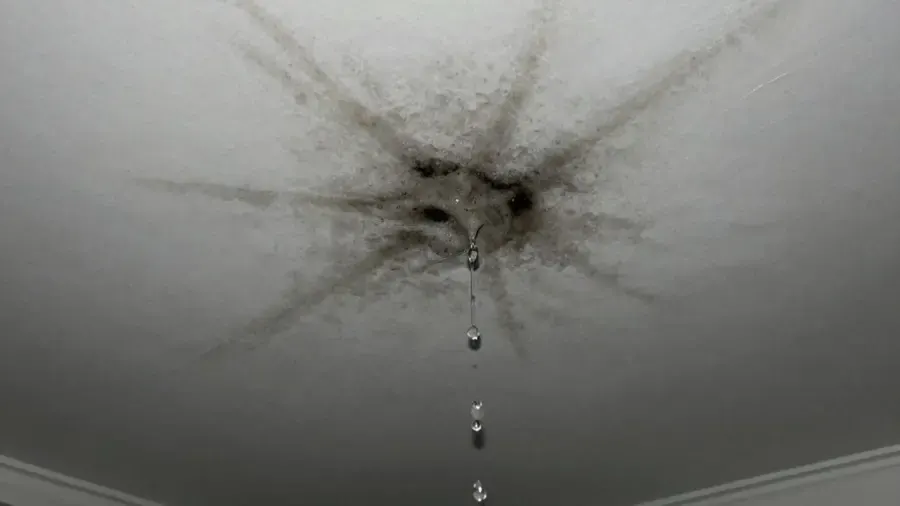
What to do right now about ceiling leak water damage
- Shut off the fixture
Close the valve at the toilet, sink or appliance above, or the main if unsure.
- Cut the light circuit
Turn off the breaker for any fixture near the wet area.
- Drain a bulge safely
Put a bucket under a sagging spot and make a small hole so it drains in one place.
- Photograph above and below
Photograph the ceiling stain and the fixture or room directly above it.
A sag is a warning
Wet drywall loses strength fast. A ceiling that bulges can drop suddenly with the water behind it, so keep people and furniture out from under it until it is drained or removed.
How the restoration team handles ceiling leak water damage
Mapped before it is dried
Readings come first, so the drying plan matches what is actually wet, not what looks wet.
Structural, not surface
Air goes into cavities, subfloor and framing, because a dry-looking wall can still hold water inside.
Logged for the adjuster
Daily moisture logs and timestamped photos build the file an insurance adjuster reviews.
What does ceiling leak water damage cost in Broomfield, CO?
In Broomfield, CO, ceiling leak water damage typically runs $800 to $4,000, depending on the water source, how far it spread along the joists and whether ceiling drywall has to be removed.
- Leak caught early
- Bay dried through small holes
- Readings logged
- Drywall section removed
- Insulation out if wet
- Joist bay dried
- Floor above and ceiling below
- Flooring removed above
- Extended drying
Ranges move with the water category, the square footage, the material class and how fast drying started. Run the numbers in the water damage cost calculator before the walkthrough.
The ceiling leak water damage dry-out, step by step
The same four stages run on every loss in Broomfield; the equipment count changes with the class of the loss.
- 01 MAP
Moisture mapping
The tech who does the walkthrough maps wet materials with thermal imaging and pinless meters before any equipment goes down.
Starting reading - 02 EXTRACT
Extraction
The extraction crew pulls standing water with truck-mounted or portable units so it leaves the building instead of moving to the next room.
After extraction - 03 DRY
Air movers and LGR
The drying team sets air movers to each room's evaporation load and runs LGR dehumidifiers, with desiccants for dense Class 4 materials.
Mid dry-out - 04 VERIFY
Daily readings
Crews log readings daily and pull equipment only when wet materials sit within 2 to 4 points of a dry reference in the same building.
At the drying goal
Interior ceiling leaks come from inside the house: an upstairs tub overflow, a failed toilet seal, a shower pan, an ice maker line or a condensate line from a furnace or AC coil. They are different from storm leaks through the roof, which are covered on the hail and roof leak page.
What a ceiling stain tells you
- A ring that keeps growing means an active leak still feeding the cavity.
- A bulge or sag means water is pooling on the back of the drywall and can drop.
- Staining near a light fixture means water may be reaching electrical wiring.
- Brown rings in a basement ceiling often trace back to a bathroom or laundry directly above.
Drying the cavity, not just the stain
The tech who does the walkthrough scans the ceiling and the floor above with a thermal camera to see how far the water spread along the joists. If the drywall is firm, the drying team can dry the bay through small holes or by lifting a register. If it sags or crumbles, that section comes down so air can reach the framing and subfloor. Drain and toilet water is treated as Category 2 or worse, so affected insulation is removed. For multi-level losses, see burst pipe cleanup.
Ceiling leaks in Broomfield homes
Two-story homes from the 1990s onward, common across north Broomfield, put bathrooms and laundry rooms directly over kitchens and family rooms. Older ranch homes put the leak over the finished basement instead. Either way, the ceiling below is the first place the water shows.
Water damage help across Broomfield
The Broomfield restoration crew covers every Broomfield ZIP, 80020, 80021, 80023, 80038, from Broomfield Heights and Lac Amora to the Broadlands, Anthem and Interlocken.
Neighboring Westminster, Superior, Louisville, Lafayette, Erie, Thornton are covered too.
See every Broomfield area coveredRelated water damage services in Broomfield
Ceiling Leak Water Damage questions in Broomfield
Can I just paint over a ceiling water stain?
Not until the cavity is dry and the source is fixed. Painting over a wet ceiling traps moisture and the stain returns.
Is a sagging ceiling dangerous?
Yes. Water-loaded drywall can drop without warning. Keep the area clear and drain or remove it.
How does the crew find the leak without tearing the ceiling open?
Thermal imaging shows cooler, wet areas behind drywall, and moisture meters confirm the edge of the wet zone.
Does ceiling drywall always have to be replaced?
No. Firm drywall wet with clean water can usually be dried in place. Sagging, soft or contaminated drywall is replaced.
Is a ceiling leak covered by insurance?
Sudden leaks from plumbing are often covered, while slow leaks over time frequently are not. Coverage depends on your policy, so it is worth checking with your own insurer.
How long does a ceiling take to dry?
A small bay often dries in two to four days. Larger or two-level losses take longer.
Ceiling leak in Broomfield?
The stain is only the part that shows. The mitigation team dries the joist bay above it and verifies it with meters.
(888) 532-8620Get the Broomfield ceiling leak dried