Sewage Backup Cleanup in Broomfield, CO
Sewage backup is Category 3 the moment it happens. The response team contains the area, removes porous materials it touched, cleans and treats every surface and dries what remains.
(888) 532-8620Sewage in the basement? Call for Category 3 cleanup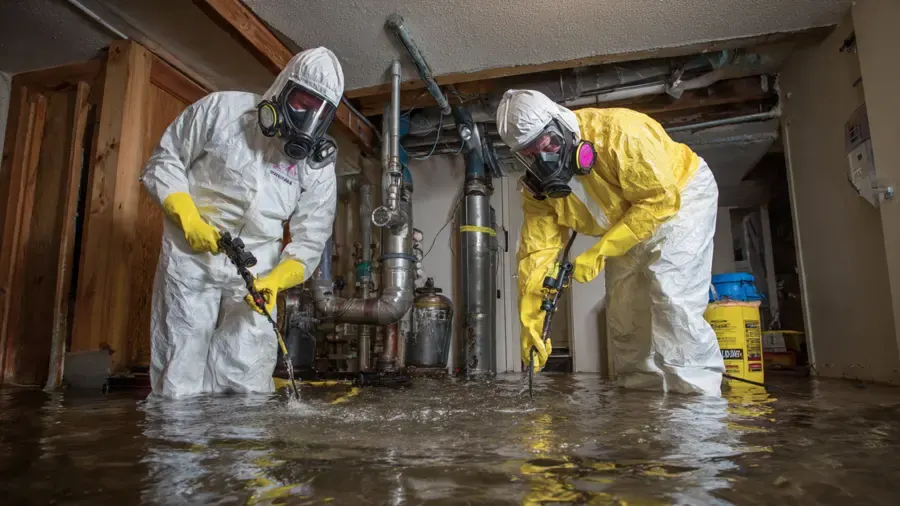
What to do right now about sewage backup cleanup
- Stop using water
Do not flush, run the washer or shower; every drain adds to the backup.
- Keep everyone out
Close off the area, keep pets and children away, and wash hands after any contact.
- Do not run fans
Household fans spread contaminated droplets; leave air handling to the crew.
- Call a plumber for the line
The blockage needs a plumber or sewer contractor; the cleanup runs alongside it.
Category 3 from the first minute
Sewage is never treated as clean water, no matter how clear it looks. That is why porous materials it touched are removed and every hard surface is cleaned and treated before drying starts.
How the restoration team handles sewage backup cleanup
Mapped before it is dried
Readings come first, so the drying plan matches what is actually wet, not what looks wet.
Structural, not surface
Air goes into cavities, subfloor and framing, because a dry-looking wall can still hold water inside.
Logged for the adjuster
Daily moisture logs and timestamped photos build the file an insurance adjuster reviews.
What does sewage backup cleanup cost in Broomfield, CO?
In Broomfield, CO, sewage backup cleanup typically runs $2,500 to $10,000, driven by the square footage affected, how much porous material has to be removed and whether finished basement walls were reached.
- Floor drain or toilet area
- Hard floor, little removal
- Cleaning and antimicrobial
- Carpet, pad, drywall out
- Containment and HEPA
- Drying after cleaning
- Multiple rooms
- Framing cleaned and treated
- Extended work
Ranges move with the water category, the square footage, the material class and how fast drying started. Run the numbers in the water damage cost calculator before the walkthrough.
The sewage backup cleanup dry-out, step by step
The same four stages run on every loss in Broomfield; the equipment count changes with the class of the loss.
- 01 MAP
Moisture mapping
The tech who does the walkthrough maps wet materials with thermal imaging and pinless meters before any equipment goes down.
Starting reading - 02 EXTRACT
Extraction
The extraction crew pulls standing water with truck-mounted or portable units so it leaves the building instead of moving to the next room.
After extraction - 03 DRY
Air movers and LGR
The drying team sets air movers to each room's evaporation load and runs LGR dehumidifiers, with desiccants for dense Class 4 materials.
Mid dry-out - 04 VERIFY
Daily readings
Crews log readings daily and pull equipment only when wet materials sit within 2 to 4 points of a dry reference in the same building.
At the drying goal
Sewage carries bacteria and viruses, so it is handled differently from every other water loss. In Broomfield it usually shows up at the lowest drain in the house: a basement floor drain, a lower-level toilet or a shower.
Why sewage backs up
- Tree roots and aging pipe in older sewer laterals, common under mid-century lots.
- Grease and wipes that block the line between the house and the city main.
- Heavy storms that surcharge the sewer system.
- A failed ejector pump in a basement bathroom.
The Category 3 protocol
The response team wears protective suits, gloves, boots and respirators, and isolates the work area with plastic containment. HEPA air scrubbers run while work is under way. Porous materials touched by Category 3 water get removed, not dried: carpet, pad, drywall to above the wet line, insulation and most cardboard and upholstered items. Hard surfaces are cleaned and treated with an EPA-registered antimicrobial left on for its full dwell time. Only then does the drying team set equipment, following the structural drying process.
Protecting the people in the house
Keep children, pets and anyone with a weak immune system out of the area. Do not run the HVAC system if its return is in the affected space. If the backup came from a sump pit instead of a drain, it is usually Category 2 and handled a little differently.
Water damage help across Broomfield
The Broomfield restoration crew covers every Broomfield ZIP, 80020, 80021, 80023, 80038, from Broomfield Heights and Lac Amora to the Broadlands, Anthem and Interlocken.
Neighboring Westminster, Superior, Louisville, Lafayette, Erie, Thornton are covered too.
See every Broomfield area coveredRelated water damage services in Broomfield
Sewage Backup Cleanup questions in Broomfield
Is it safe to clean up sewage myself?
Small, contained spills on hard floors can be cleaned with protection, but sewage in carpet, drywall or a finished basement carries health risks and usually needs professional containment.
What has to be thrown away after a sewage backup?
Porous items touched by sewage: carpet and pad, drywall below the wet line, insulation, upholstered furniture and most cardboard.
What is an EPA-registered antimicrobial?
A cleaning product registered with the EPA for use on the organisms found in sewage, applied at the dwell time on its label.
How long does sewage cleanup take?
Removal and cleaning usually take a day or two, then drying runs several more days, depending on the size of the loss.
Does insurance cover a sewer backup?
Many homeowners policies need a sewer or water backup endorsement. Coverage depends on your policy, so it is worth checking with your own insurer.
How can I prevent another backup?
A camera inspection of the sewer lateral, root clearing, a backwater valve and keeping grease and wipes out of drains reduce the risk.
Sewage backup in Broomfield?
Category 3 water needs containment and removal, not just drying. The response team handles the cleanup and the drying that follows.
(888) 532-8620Call for Broomfield sewage cleanup now