Structural Drying and Dehumidification in Broomfield, CO
Surface dry is not dry. The drying team dries framing, subfloor and wall cavities to the IICRC S500 goal, and the equipment stays until the readings say dry, not until it looks dry.
(888) 532-8620Get the structure dried to the S500 goal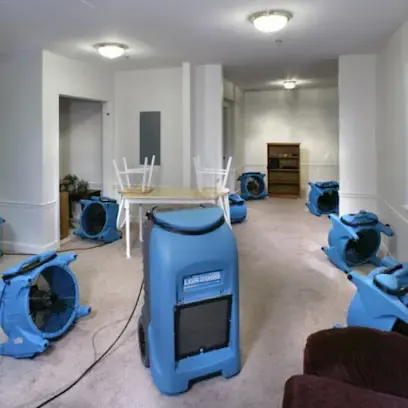
What to do right now about structural drying
- Keep the equipment running
Leave air movers and dehumidifiers on, even overnight, unless the crew says otherwise.
- Keep doors and windows as set
Containment works only if the drying area stays closed.
- Empty nothing yourself
LGR units pump their own water; call if a unit shows an error.
- Note any new smell or stain
Tell the crew about new odors or stains during the dry-out.
The drying goal is a number
Crews compare daily readings against a dry reference material in an unaffected part of the same building. Equipment comes out when the wet material sits within 2 to 4 points of that reference.
How the restoration team handles structural drying
Mapped before it is dried
Readings come first, so the drying plan matches what is actually wet, not what looks wet.
Structural, not surface
Air goes into cavities, subfloor and framing, because a dry-looking wall can still hold water inside.
Logged for the adjuster
Daily moisture logs and timestamped photos build the file an insurance adjuster reviews.
What does structural drying cost in Broomfield, CO?
In Broomfield, CO, structural drying typically runs $1,000 to $5,500 for a residential loss, based on the number of rooms, the class of the loss, how many days equipment runs and the water category.
- One or two rooms
- Air movers and one LGR
- Three to five days
- Ceilings and walls wet
- Several dehumidifiers
- Containment set
- Hardwood, plaster, concrete
- Desiccant and mats
- Extended monitoring
Ranges move with the water category, the square footage, the material class and how fast drying started. Run the numbers in the water damage cost calculator before the walkthrough.
The structural drying dry-out, step by step
The same four stages run on every loss in Broomfield; the equipment count changes with the class of the loss.
- 01 MAP
Moisture mapping
The tech who does the walkthrough maps wet materials with thermal imaging and pinless meters before any equipment goes down.
Starting reading - 02 EXTRACT
Extraction
The extraction crew pulls standing water with truck-mounted or portable units so it leaves the building instead of moving to the next room.
After extraction - 03 DRY
Air movers and LGR
The drying team sets air movers to each room's evaporation load and runs LGR dehumidifiers, with desiccants for dense Class 4 materials.
Mid dry-out - 04 VERIFY
Daily readings
Crews log readings daily and pull equipment only when wet materials sit within 2 to 4 points of a dry reference in the same building.
At the drying goal
Structural drying is the part of a water loss that decides whether problems show up months later. A wall can feel dry to the touch while the bottom plate and insulation behind it still hold water. The drying team measures its way to the finish instead of guessing.
How a room is set up
- Moisture mapping first: thermal imaging and pinless meters mark every wet material before equipment goes down.
- Air movers set to the evaporation load of the room, aimed along walls and under cabinets.
- LGR dehumidifiers pull the evaporated water out of the air; desiccants handle dense Class 4 materials and cold spaces.
- Containment with plastic sheeting shrinks the space being dried, so equipment works faster.
Class 1 through 4
The IICRC S500 standard sorts losses by how much water was absorbed and how hard it is to remove. Class 1 is a small area with little absorption. Class 2 is a whole room with wet carpet and walls wicked up to about two feet. Class 3 is water from above that soaked ceilings and walls. Class 4 is dense material such as hardwood, plaster or concrete. The class sets how much equipment a room needs.
Drying in Colorado air
Broomfield air is usually dry outside, which helps, but basements are cool and wet materials still need controlled dehumidification. The drying team records temperature, relative humidity and grains per pound daily, and moves or removes equipment as readings drop. The drying time estimator gives a rough idea of how many days a loss like yours usually takes.
Water damage help across Broomfield
The Broomfield restoration crew covers every Broomfield ZIP, 80020, 80021, 80023, 80038, from Broomfield Heights and Lac Amora to the Broadlands, Anthem and Interlocken.
Neighboring Westminster, Superior, Louisville, Lafayette, Erie, Thornton are covered too.
See every Broomfield area coveredRelated water damage services in Broomfield
Structural Drying and Dehumidification questions in Broomfield
Why does the equipment stay after the floor looks dry?
Framing, subfloor and wall cavities dry slower than surfaces. The crew removes equipment when readings reach the drying goal.
What is IICRC S500?
It is the industry standard for professional water damage restoration, covering categories of water, classes of loss and how drying is done and verified.
What is an LGR dehumidifier?
Low grain refrigerant units pull more water out of the air than standard dehumidifiers, especially as the room gets drier.
Why is it so loud and warm?
Air movers and dehumidifiers move a lot of air and release heat. Warm, moving, dry air is what makes water evaporate from materials.
How long does structural drying take?
A contained Class 1 or 2 loss usually dries in three to five days. Hardwood, plaster and concrete take longer.
Does the insurer see the drying logs?
Daily psychrometric logs and moisture readings are usually part of the claim file adjusters review. Coverage depends on your policy, so it is worth checking with your own insurer.
Structural drying in Broomfield
Framing and cavities hold water long after the floor looks dry. The drying team stays until the readings prove it.
(888) 532-8620Book structural drying in Broomfield