Hail and Roof Leak Water Damage in Broomfield, CO
Broomfield sits in the Front Range hail belt. When hail or wind opens shingles, flashing or a skylight, storm water reaches the attic first. The drying team dries insulation, ceilings and walls below it.
(888) 532-8620Storm water through the roof? Call now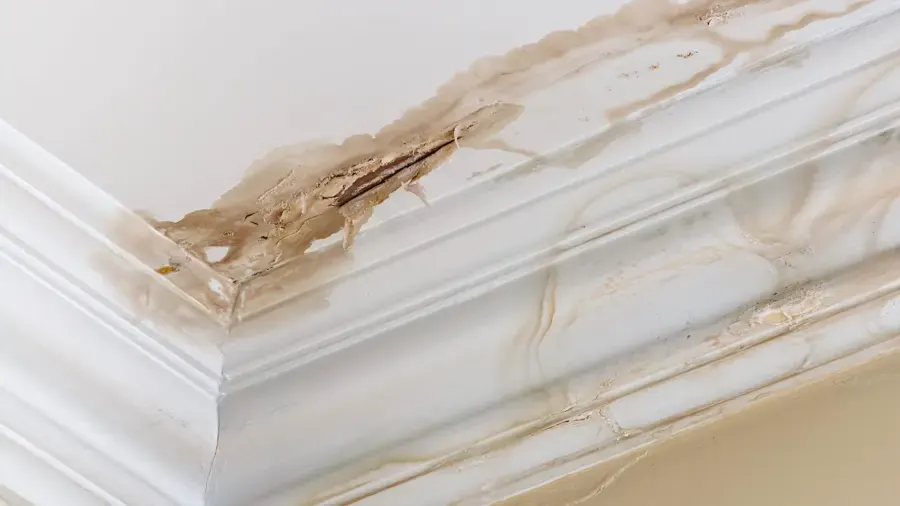
What to do right now about hail and roof leak water damage
- Catch the drip
Set a bucket and puncture a bulging ceiling spot with a small hole so water drains in one place.
- Stay off the roof
Wet shingles and hail debris are slick; leave tarping to a roofer.
- Photograph inside and out
Photograph ceiling stains, the attic if safe, and hail marks on gutters or vents.
- Note the storm date
Write down the date and time of the storm for the claim.
Wet insulation hides the leak
Attic insulation can hold a lot of water before a ceiling stain appears. By the time the stain shows, the joist bay is usually wet, so the drying team checks the attic before the ceiling.
How the restoration team handles hail and roof leak water damage
Mapped before it is dried
Readings come first, so the drying plan matches what is actually wet, not what looks wet.
Structural, not surface
Air goes into cavities, subfloor and framing, because a dry-looking wall can still hold water inside.
Logged for the adjuster
Daily moisture logs and timestamped photos build the file an insurance adjuster reviews.
What does hail and roof leak water damage cost in Broomfield, CO?
In Broomfield, CO, interior drying after a hail or roof leak typically runs $1,000 to $5,000, driven by how much insulation got wet, how many ceilings were affected and whether drywall has to come down.
- Small attic area wet
- Ceiling dried in place
- Photo documentation
- Insulation removed
- Ceiling drywall opened
- Walls checked below
- Skylight or roof deck failure
- Multiple levels wet
- Extended drying
Ranges move with the water category, the square footage, the material class and how fast drying started. Run the numbers in the water damage cost calculator before the walkthrough.
The hail and roof leak water damage dry-out, step by step
The same four stages run on every loss in Broomfield; the equipment count changes with the class of the loss.
- 01 MAP
Moisture mapping
The tech who does the walkthrough maps wet materials with thermal imaging and pinless meters before any equipment goes down.
Starting reading - 02 EXTRACT
Extraction
The extraction crew pulls standing water with truck-mounted or portable units so it leaves the building instead of moving to the next room.
After extraction - 03 DRY
Air movers and LGR
The drying team sets air movers to each room's evaporation load and runs LGR dehumidifiers, with desiccants for dense Class 4 materials.
Mid dry-out - 04 VERIFY
Daily readings
Crews log readings daily and pull equipment only when wet materials sit within 2 to 4 points of a dry reference in the same building.
At the drying goal
The strip of Colorado from Denver up through Boulder County sees some of the most frequent hail in the country, and storms that cross US 36 regularly hit Broomfield roofs. A roof can look intact from the street and still leak through a bruised shingle, a cracked vent boot or dented flashing.
How storm water moves through a house
- It soaks attic insulation, which hides the leak for days.
- It travels along rafters and drips at a ceiling light, a seam or a wall corner.
- It runs inside exterior walls around a skylight or a chimney.
- Heavy spring snow on a damaged roof can repeat the leak weeks after the hail.
Two jobs, two trades
A roofer tarps and repairs the roof. The restoration team handles the water inside: pulling wet insulation, drying the ceiling drywall and joist bays, and checking the walls below. Where the ceiling is sagging, the drying team opens it before it falls. The interior side of this work is also described on the ceiling leak water damage page.
Documenting a hail claim
Hail claims often involve both the roof and the interior. Timestamped photos of each stain before anything is removed, a moisture map of the ceilings and daily drying logs help an adjuster separate storm damage from older wear. Keep the storm date handy; the National Weather Service office in Boulder posts local storm information at weather.gov.
Severe storm and hail preparation tips are at ready.gov. Stay off a wet or hail-damaged roof; tarping is roofer work.
Water damage help across Broomfield
The Broomfield restoration crew covers every Broomfield ZIP, 80020, 80021, 80023, 80038, from Broomfield Heights and Lac Amora to the Broadlands, Anthem and Interlocken.
Neighboring Westminster, Superior, Louisville, Lafayette, Erie, Thornton are covered too.
See every Broomfield area coveredRelated water damage services in Broomfield
Hail and Roof Leak Water Damage questions in Broomfield
How do I know hail damaged my roof?
Dented gutters, downspouts and vents, granules in the downspout splash, and bruised or cracked shingles are common signs. A roofer can confirm.
Why did the leak show up weeks after the storm?
A hail bruise may let water in only during heavy rain or melting snow. Wet insulation can also hide a leak until the ceiling stains.
Should the roof or the interior be fixed first?
The roof opening gets tarped first so no more water enters. Interior drying starts at the same time; it does not wait for the new roof.
Does wet attic insulation have to be replaced?
Blown-in and batt insulation that soaked through usually comes out, because it compresses and holds water against the framing.
Is hail damage covered by homeowners insurance?
Hail is a commonly covered peril, and interior water damage from a storm opening is often part of the same claim. Coverage depends on your policy, so it is worth checking with your own insurer.
What helps a hail claim move?
The storm date, roof photos, interior photos taken before demolition, a moisture map and daily drying logs.
Storm water in a Broomfield ceiling?
Wet attic insulation keeps soaking the ceiling below. The drying team pulls it, dries the joist bays and logs every reading.
(888) 532-8620Start the storm leak dry-out in Broomfield